

MagSafe Case vs Regular Case for iPhone: Which Should You Buy?

Last Updated: November 15, 2026
Quick Summary
A MagSafe case wins on charging speed and accessory fit, while a regular case wins on price and sometimes on bulk. A MagSafe-compatible case is required to reach the full 15W wireless charging rate, so if you charge on a pad every night, the difference is not cosmetic.
- You need a MagSafe case only if you use magnetic chargers, mounts or accessories.
- Regular cases are not inherently less protective, because drop protection comes from construction, fit and material coverage.
- A bulky case pushes the phone further from the pad, weakening the field and slowing charging.
- A metal plate or metal-backed case can block the wireless charging field entirely.
- Metanoia's MagSafe cases are priced under £15, with the Candy MagSafe case at £5.99.
Table of Contents
- MagSafe Case vs Regular Case: The Quick Comparison
- What Magnetic Alignment Actually Does for Charging Speed
- Do You Need a MagSafe Case? Match It to How You Use Your Phone
- iPhone Case Wireless Charging Compatibility: What Works and What Slows Down
- Protection, Bulk and Heat: Where Regular Cases Still Win
- Best MagSafe Cases for iPhone 15 and Newer in the Metanoia Range
- Pick Your Case and Start Charging Properly
- Frequently Asked Questions
MagSafe Case vs Regular Case: The Quick Comparison
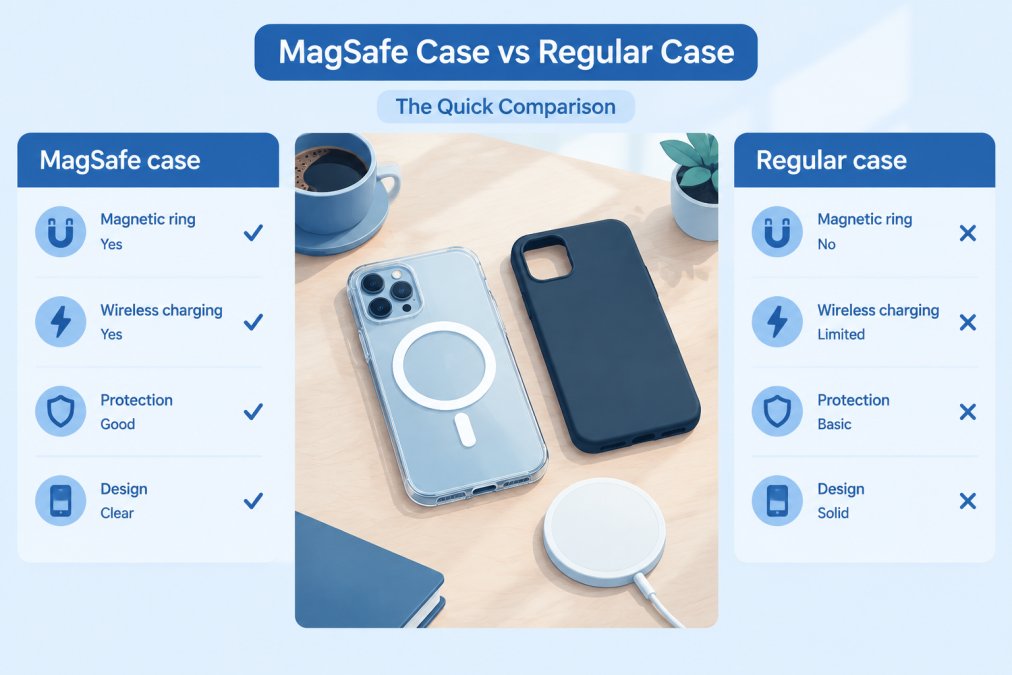
The short answer: a MagSafe case wins on charging speed and accessory fit, while a regular case wins on price and sometimes on bulk. A MagSafe-compatible case is required to reach the full 15W wireless charging rate, according to Twelve South's MagSafe compatibility guide, so if you charge on a pad every night, the difference is not cosmetic.
Below we break down what the magnet ring actually does, when it does nothing at all, and which case suits how you use your phone.
How the Two Cases Differ in Practice
A MagSafe case contains an integrated magnet ring that snaps the phone into exact alignment with a charging puck or mount. A regular case has no such array, so alignment is left to your hand.
That single design choice drives everything else. ZDNet's case comparison notes that regular cases can interfere with magnetic strength, which is why a non-magnetic case may charge slowly or slip off a car mount. Protection, though, is a separate question: The Novo's protection analysis found that regular cases are not inherently less protective, because drop protection comes from construction, fit and material coverage.
What Magnetic Alignment Actually Does for Charging Speed
Alignment precision is the whole point, and it is worth understanding why. Wireless charging is inductive: a coil in the pad creates an alternating magnetic field, and a coil in the phone converts it back into current. The two coils have to sit close and concentric for that transfer to be efficient. Shift the phone a few millimetres off-centre and the coupling weakens; the pad keeps drawing the same power from the wall, but less of it reaches the battery and more of it becomes heat.
A MagSafe case solves this with a magnetic array that pulls the phone into place every time. The ring is arranged so the phone's internal magnet array and the case ring lock together, and the pad's own magnets then centre the whole assembly over the charging coil. It also means a magnetic mount holds firm without a clamp, and a wallet or grip attaches without scratching the phone's back, a benefit OtterBox's MagSafe explainer highlights.
Why alignment matters more than the headline wattage
A pad rated at 15W only delivers 15W when the coils are properly coupled. With a regular case and a hand-placed phone, a common pattern is that the phone settles slightly off-centre, the pad derates to a lower rate, and the phone warms up because the lost energy is turning into heat in the gap. That is the practical case for the magnet ring: not raw speed, but repeatable speed.
Does the magnet weaken over time?
This is the question most guides avoid. The magnets used in MagSafe cases are neodymium, and neodymium loses strength permanently only under heat, physical shock or a strong opposing field. What does degrade faster is the case itself: adhesive layers soften, the magnet pocket stretches, and a cheap case can develop a rattle or a dead spot where the ring has shifted. The practical test is simple, if the case no longer snaps firmly to a charger or mount, the ring has moved or weakened, and it is time to replace the case rather than the phone.
Beyond Apple's own accessories
The magnet ring is not tied to Apple-branded chargers. That interoperability is the quiet advantage of a MagSafe case: the case you buy today will still clip to the mount you buy next year, whereas a regular case locks you into clamps and adhesive plates.
ZDNet's case comparison
Do You Need a MagSafe Case? Match It to How You Use Your Phone
You need a MagSafe case only if you use magnetic chargers, mounts or accessories. If you charge by cable and never use a car mount, a regular case does the same job for less.
Here is how we would decide:
| Your habit | Case type | Why |
|---|---|---|
| Nightly pad charging | MagSafe | Full 15W rate, no fiddling |
| Car mount user | MagSafe | Snap-on hold, no clamp |
| Cable-only charger | Regular | Same protection, lower cost |
| Wallet or grip user | MagSafe | Secure attachment, no scratches |
| Tight budget | Regular | Covers the basics |
If you are still weighing whether a case is worth it at all, our guide on whether you really need a case for your iPhone 15 walks through that decision.
iPhone Case Wireless Charging Compatibility: What Works and What Slows Down
Compatibility is broader than the marketing suggests.
Thickness matters too. A bulky case pushes the phone further from the pad, which weakens the electromagnetic field and slows charging. Thick leather or wallet cases are the usual culprits. Heat is the other factor: poor thermal management inside a snug case can make the phone throttle its charging speed to protect the battery.
If you are building a charging setup for travel as well as home, our guide to the best mobile charging solutions for travel covers the wider kit.
Protection, Bulk and Heat: Where Regular Cases Still Win
Regular cases still win on two counts: price and, often, slimness. A basic silicone or TPU case costs less and can be thinner than a MagSafe model, because it carries no magnet array. That much is obvious. What most guides skip is the mechanism behind the trade-off, and that is where the real decision sits.
What the magnet ring actually adds
The bigger variable is the case design around the ring: a rigid polycarbonate back bonded to a TPU bumper will feel bulkier than a single-mould silicone case even when the magnet stack is identical. If slimness is your priority, compare the total case thickness rather than the magnet ring alone.
Heat is the part that matters
Wireless charging is inductive, and induction is never perfectly efficient. Some of the energy that does not reach the battery becomes heat, and that heat has to escape through the back of the phone and the case. A thick, insulating case, dense leather, a wallet folio, a metal-backed design, traps that heat against the coil. The phone responds by throttling its charging rate to protect the battery, so a case that looks harmless can quietly halve your charging speed on a warm evening.
Watch out: a metal plate or metal-backed case placed between the phone and a wireless charger can block the field entirely and concentrate heat in one spot, if a case advertises a metal plate for magnetic mounting, check that it is positioned clear of the charging coil.
Signal and drop protection
Where a regular case genuinely matches a MagSafe one is drop protection: raised edges, corner air pockets and shock-absorbing TPU do that work, not magnets.
Best MagSafe Cases for iPhone 15 and Newer in the Metanoia Range
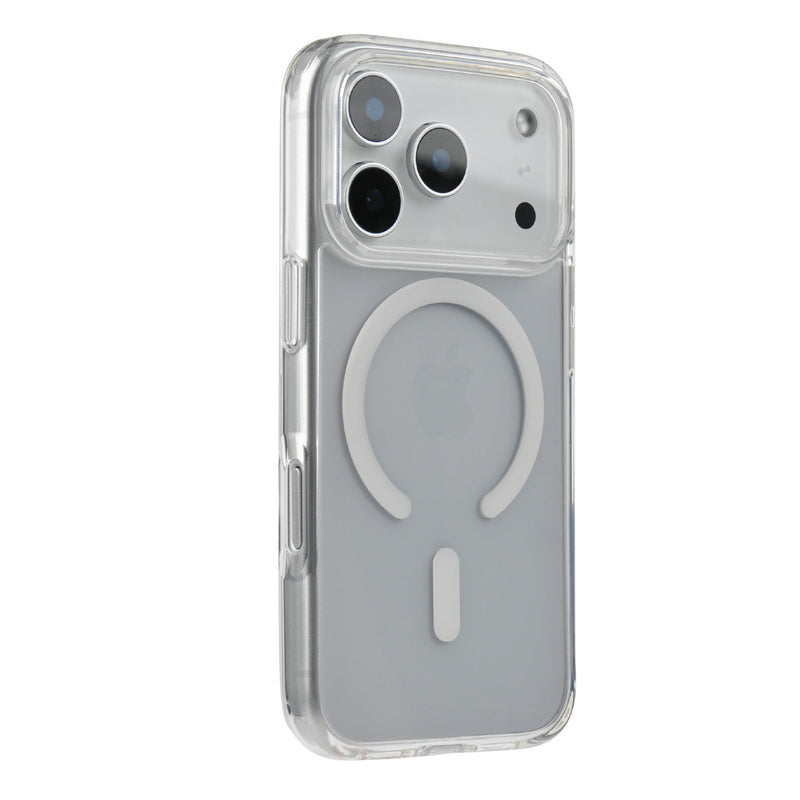
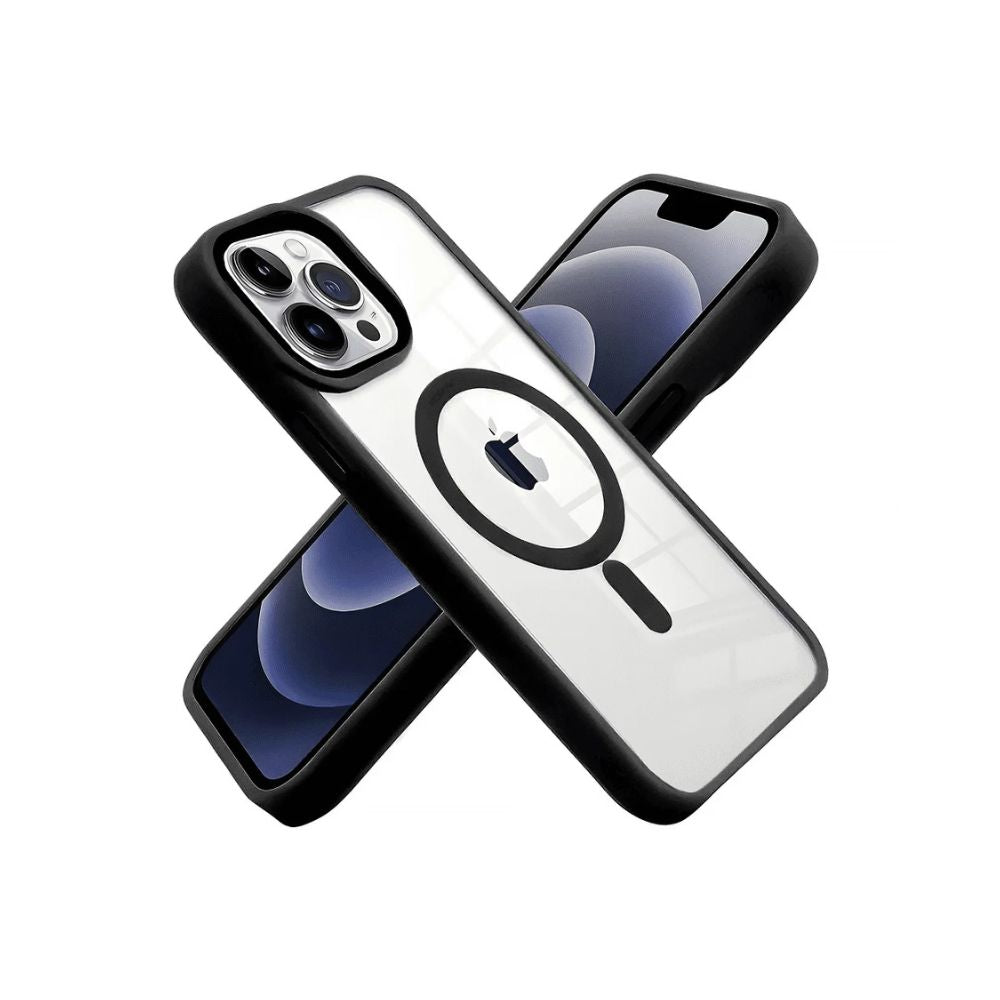
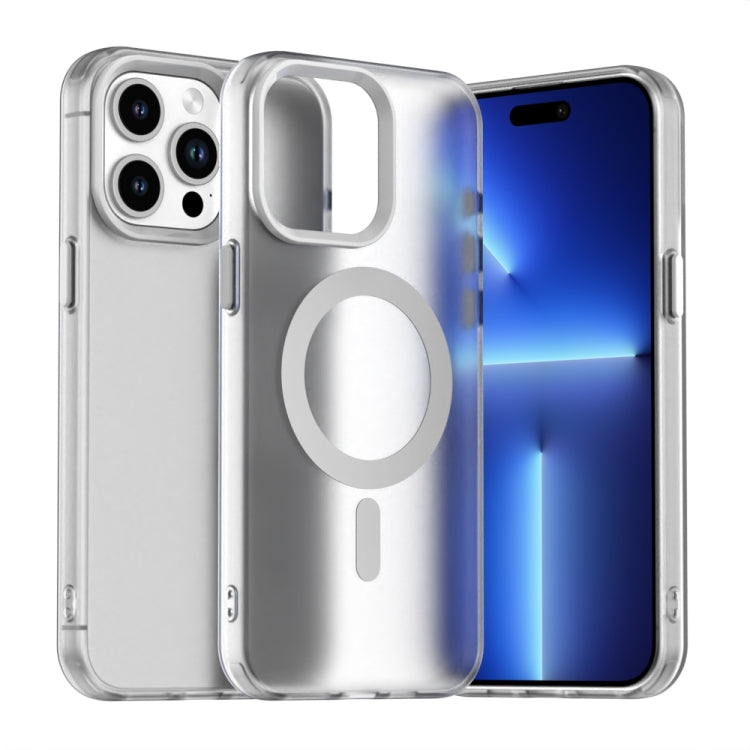
All three below are MagSafe-ready and priced under £15.
- iPhone Vibe MagSafe Case for iPhone 15 and 16 Series, £14.99. Built-in strong magnets click into place every time, and it supports all MagSafe chargers, wallets and mounts without removal. Textured sides add grip. See the Vibe MagSafe Case.
- iPhone Clear Case with MagSafe, £14.99. A crystal-clear TPU gel case that shows off the phone's finish, with full-body scratch protection and a stain-resistant coating. It fits iPhone 15 through iPhone 17 Pro Max. View the clear MagSafe case.
- Candy MagSafe PC Hybrid TPU Case, £5.99. A PC and TPU hybrid for the iPhone 15, 15 Plus and 15 Pro, with raised edges and precise cutouts. Check the Candy MagSafe case.
Metanoia MagSafe case prices
Pick Your Case and Start Charging Properly
The decision comes down to one question: do you use magnetic accessories? If yes, a MagSafe case pays for itself in charging speed and mount reliability. If no, a regular case protects your phone just as well for less.
At Metanoia media, we keep both routes open, with MagSafe cases from £5.99 and clear and Vibe options at £14.99, plus charging accessories to match. Browse the range and match the case to how you charge.
Ready to charge without the guesswork? Metanoia media stocks MagSafe cases for iPhone 15 and newer alongside the charging accessories that pair with them, all at prices that undercut the high street. Get started with Metanoia media and give your iPhone the snap-on setup it was built for.
Frequently Asked Questions
What is the difference between a MagSafe case and a regular iPhone case?
A MagSafe case has a built-in ring of magnets that aligns with the charging coil and accessories, while a regular case is just a protective shell with no magnetic array. That magnet ring is what delivers full 15W wireless charging and keeps snap-on wallets, mounts and chargers in place. A regular case can still protect your phone well, but it cannot guarantee the same alignment or magnetic hold.
Do you need a MagSafe case to use a MagSafe charger?
No, a MagSafe charger will still send power through a regular case, but you lose the magnetic snap and the charger may slide out of position. Without the integrated magnet ring, alignment is approximate, so charging can be slower and warmer. If you rely on a magnetic mount in the car or a snap-on wallet, a MagSafe case is the practical choice.
Does a MagSafe case charge an iPhone faster than a regular case?
MagSafe-compatible cases are designed to align with MagSafe chargers through their magnet ring. A regular case will still charge, but without that alignment the connection may be less consistent.
Are MagSafe cases more protective than regular cases?
Not automatically. Drop protection depends on construction, fit and material coverage rather than the magnet ring. A well-built regular case with raised edges and shock absorption can protect just as well as a MagSafe case. Choose based on the protection features you need, then decide whether you also want magnetic alignment.
How do you know if an iPhone case is MagSafe compatible?
Look for an explicit MagSafe claim in the product listing and a visible or described magnet array. Cases sold as MagSafe-compatible are designed to maintain alignment for chargers and accessories, while standard magnetic cases may hold less securely. Check the supported iPhone models too, since fit varies between generations.
