

Best Mobile Charging Solutions for Travel: 2026 UK Guide

Table of Contents
- Quick Comparison: Best Mobile Charging Solutions for Travel
- How to Choose the Best Travel Power Bank
- Power Bank Capacity for Travel: How Many mAh You Actually Need
- Power Bank Flight Rules: What You Can Carry On Board
- The Best Travel Charger for Phone and Laptop
- Plug Types, Voltage and Charging Kits for Different Destinations
- Charging Accessories That Complete Your Travel Kit
- Conclusion: Matching Your Travel Charging Setup to Your Trip
- Frequently Asked Questions
Last Updated: October 12, 2026
Quick Comparison: Best Mobile Charging Solutions for Travel
The best mobile charging solutions for travel in 2026 pair a 10,000-20,000mAh power bank with a compact multi-port wall charger and the right cables. That covers a full travel day without weighing down your bag.
Most travellers overpack cables and underpack power. A single 20,000mAh bank with built-in cables replaces three chargers.
Here is the comparison table we would use to plan any trip:
| Product | Capacity / Power | Best For | Price |
|---|---|---|---|
| 20000mAh Power Bank with Dual Built-in Cables | 20,000mAh, 74Wh, 22.5W PD | Long trips, multiple devices | £22.99 |
| Portable Power Bank 10000mAh with 4 Cables | 10,000mAh, 37Wh, 5V/2A | Short trips, light packing | £19.99 |
| 120W Universal Fast Charger SP-CDK002 | 120W, USB-C PD | Laptop plus phone charging | £39.99 |
| 20W Foldable Dual USB-A & USB-C Adapter | 20W PD, 18W QC | Everyday carry, single device | £13.99 |
How to Choose the Best Travel Power Bank
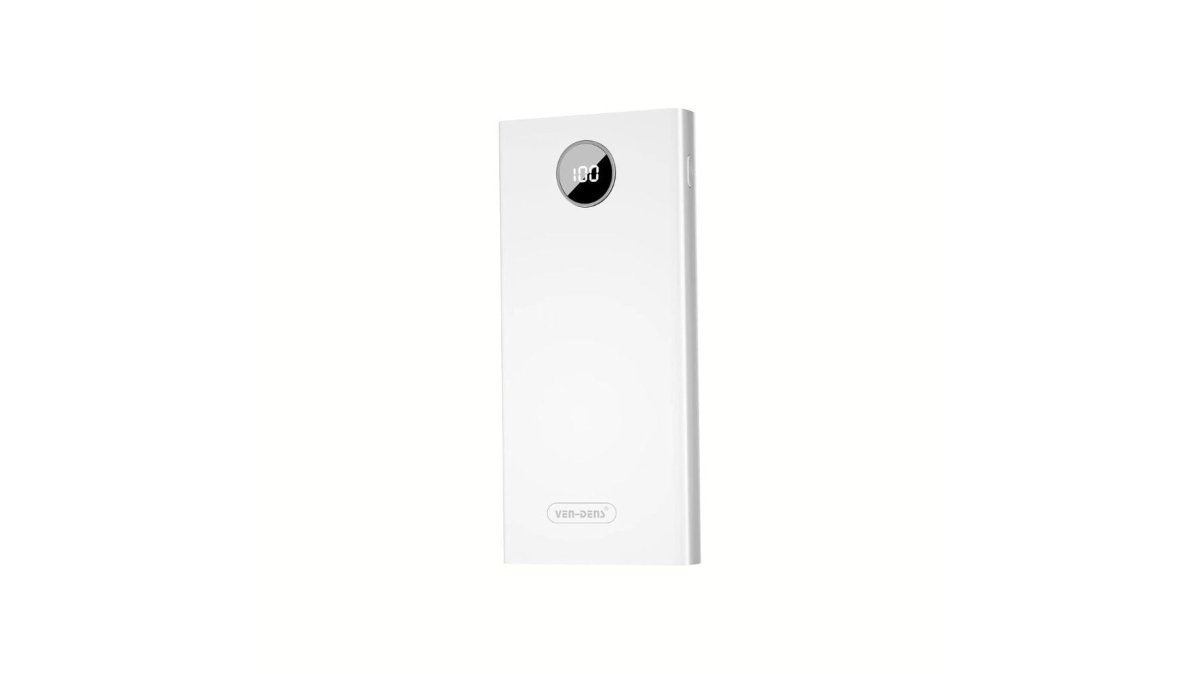
Start with how many devices you carry and how long you'll be away from a socket. A 10,000mAh bank suits a phone-only weekend. A 20,000mAh bank handles a phone, tablet and earbuds across two or three days.

Weight matters more than most buyers expect. The 20,000mAh model weighs 420g, roughly a paperback; the 10,000mAh option is 15mm slim and slips into a jacket pocket.
Built-in cables versus detachable cables
Built-in cables remove the most common travel failure: forgetting the right cord. The 10,000mAh model carries four integrated cables (USB-C, Lightning, Micro USB and USB-A); the 20,000mAh model has two built-in plus one detachable Micro-USB.
Detachable cables let you swap length and replace worn cords. Built-in cables never get left at a hotel. For most trips, built-in wins.
Power Bank Capacity for Travel: How Many mAh You Actually Need
Match capacity to trip length, not the biggest number on the box. One phone for a day: 10,000mAh is plenty. Two devices over three days: go to 20,000mAh.

Power bank capacity is the total charge a battery stores, measured in milliamp-hours (mAh). A 10,000mAh bank delivers around three full phone charges; a 20,000mAh bank roughly doubles that.
Real-world capacity and recharge time
Real-world output runs lower than the label: conversion losses mean a 10,000mAh bank delivers closer to 6,000-7,000mAh of usable power.
Recharge time matters on the road. The 20,000mAh model supports USB-C PD input and output, so it refills faster from a PD wall charger than a standard USB-A port, and a 120W charger cuts that further.
Power Bank Flight Rules: What You Can Carry On Board
Most airlines allow power banks in cabin baggage only, never checked luggage. The limit is usually 100 watt-hours (Wh) per battery, which covers both banks in our range.
The 20,000mAh model is rated 74Wh and the 10,000mAh model 37Wh, both comfortably under the 100Wh threshold most carriers apply.
Wh limits and cabin bag restrictions
Watt-hours, not mAh, is the number security staff check. To convert, multiply mAh by voltage and divide by 1,000: a 20,000mAh bank at 3.7V works out to 74Wh.
Check your specific airline's rules before you fly, as some carriers set their own limits. The UK Civil Aviation Authority guidance on lithium batteries confirms that spare lithium batteries must travel in the cabin.
The three-tier system most carriers use
Rather than one blanket rule, most airlines apply a tiered structure based on watt-hours:
| Tier | Watt-hour rating | What it means for you |
|---|---|---|
| Under 100Wh | Up to 100Wh | Allowed in cabin baggage without approval. Covers both banks in our range. |
| 100Wh to 160Wh | 100-160Wh | Allowed in cabin baggage only, usually with airline approval at check-in. |
| Over 160Wh | Above 160Wh | Generally prohibited in passenger baggage. |
A 20,000mAh bank at 74Wh sits in the first tier. A 27,000mAh bank at roughly 100Wh sits on the boundary, so check the exact figure. Banks above 100Wh need declaring and approval, and are often capped at two per passenger.
Why mAh is the wrong number to quote at security
Security and check-in systems work in watt-hours because Wh accounts for voltage: two banks with the same mAh rating can differ in Wh if cell voltage differs. If asked, quote the Wh figure printed on the casing, not the mAh from the listing.
Most power banks print both mAh and Wh on the label. If yours only shows mAh, calculate it: mAh × voltage ÷ 1,000.
Pre-flight power bank checklist
- Confirm the Wh rating is printed on the power bank casing
- Check your airline's specific limit, as some set lower caps than the 100Wh default
- Pack the bank in your cabin bag, not your checked suitcase
What happens if you get it wrong
A power bank found in checked luggage is typically removed and may be confiscated, and some carriers levy a fine. Checking the rules takes minutes; ignoring them risks a dead bank at best and a lithium fire in the hold at worst.
The Best Travel Charger for Phone and Laptop
A 120W USB-C PD charger is the best single charger for phone and laptop travel, replacing your laptop brick and phone plug with one compact unit.
The 120W Universal Fast Charger SP-CDK002 delivers up to 120W total output and adjusts power to match each device, charging USB-C laptops, tablets and phones from one port setup.
Wattage, USB-C PD and multi-port charging
Wattage determines charging speed: a phone needs 20W for fast charging, a laptop 45W to 65W or more.
20000mAh Power Bank with Dual Built-in Cables →
USB-C Power Delivery (PD) is the standard that negotiates the right wattage automatically. Look for PD on every port you plan to use.
| Charger | Output | Best For |
|---|---|---|
| 120W Universal SP-CDK002 | 120W total | Laptop + phone + tablet |
| 20W Foldable Adapter | 20W PD, 18W QC | Phone only, minimal carry |
| 30W Travel Charger | 30W PD | Phone + tablet |
| XBX09 40W 5-Port | 40W, 5 USB ports | Family or group travel |
Multi-port chargers let you top up several devices overnight from one socket. The LDNIO SC10610 socket offers 10 mains sockets plus 6 USB ports for a whole family's kit.
Plug Types, Voltage and Charging Kits for Different Destinations
Destination plug types and voltage decide which adapters you need. Most modern chargers accept 100-240V, so you need a physical plug adapter, not a voltage converter.
The 20W Foldable Adapter runs on universal 100-240V input and works in over 150 countries. The 30W Travel Charger accepts AC100-240V at 50-60Hz.

For European trips, an EU plug adapter is the common need. For North American trips, a US plug adapter.
The plug types you will actually meet
Plug shapes vary by region, and a single trip can cross several. The main types a traveller encounters:
| Plug type | Where you will meet it | Notes |
|---|---|---|
| Type G | UK, Ireland, Hong Kong, Singapore, UAE | Three rectangular pins. The UK standard. |
| Type C | Most of Europe, Turkey, much of South America | Two round pins. The common European plug. |
| Type A | North America, Japan, parts of South America | Two flat parallel pins. |
| Type I | Australia, New Zealand, China, Argentina | Two angled flat pins. |
| Type D | India, Sri Lanka, Nepal | Three round pins in a triangle. |
A universal travel adapter covers most of these in one unit. A single-region adapter is lighter but only works in one area.
Voltage and frequency: the part most travellers miss
Voltage is not the same as plug shape. Most of Europe runs 220-240V at 50Hz, North America 110-120V at 60Hz, and Japan 100V with different frequencies east and west.
A dual-voltage charger rated 100-240V handles all of these without a converter.
Frequency matters less for chargers than for appliances with motors or heating elements, but 50Hz and 60Hz regions exist.
Building a kit for your destination
A practical kit changes with where you are going:
- European city break: one Type C adapter, a 20W or 30W charger, a 10,000mAh bank, and a short USB-C cable.
- North American trip: one Type A adapter, a 100-240V charger, and a 20,000mAh bank for long days out.
- Multi-country trip: a universal adapter, a multi-port charger, and a 20,000mAh bank with built-in cables.
What to check before you pack
- Confirm your charger is rated 100-240V
- Match the adapter to every country on your itinerary, not just the first one
- Check whether your hotel or accommodation has USB sockets built into the wall
A universal adapter plus a 100-240V multi-port charger covers almost any itinerary. Add a power bank sized to your longest day and you have a kit that works from the airport lounge to the hotel room.
Charging Accessories That Complete Your Travel Kit
A power bank alone is not a full kit, the accessories often matter more than the bank itself.
Here is the checklist we would pack for any trip:
- One power bank sized to your trip (10,000mAh or 20,000mAh)
- One multi-port wall charger (20W to 120W depending on devices)
- One car charger for road trips or hire cars
The 38W Car Charger adds dual ports and built-in Type-C and Lightning cables for driving days. The 38W PD20W Car Charger with a 1m Type-C cable suits phones and tablets on the move.
Conclusion: Matching Your Travel Charging Setup to Your Trip
The right kit depends on your itinerary, not on buying the most expensive gear. A weekend city break needs a 10,000mAh bank and a 20W adapter.
Getting this wrong means dead phones at the worst moment. At Metanoia media, we stock charging solutions built for exactly this problem, from the 20000mAh Power Bank with Dual Built-in Cables to the 120W Universal Fast Charger, all with competitive pricing and practical specs for real travel.
Build your travel charging kit around trip length and device count, then check the flight rules before you pack. Explore the full range and get started with Metanoia media to keep every device powered wherever you go.
Frequently Asked Questions
Can you take a 20000mAh power bank in carry-on luggage?
Yes. A 20000mAh power bank is rated at 74Wh, which sits well under the 100Wh threshold most airlines apply to lithium batteries in hand luggage. It must travel in your cabin bag, not in checked baggage. The Metanoia 20000mAh power bank with dual built-in cables comes in at 74Wh, so it clears standard cabin restrictions. Always confirm your specific airline's policy before flying, since some carriers set lower limits.
What capacity power bank do I need for a week-long trip?
For a week away, a 20000mAh power bank gives you roughly four to five full phone charges, which covers most travellers who also have access to a wall socket at their accommodation. If you only need backup for day trips and commuting, a 10000mAh model providing about three phone charges is lighter and easier to carry. Match the power bank capacity for travel to how often you will be away from mains power.
Can a portable charger charge a laptop?
A portable charger can charge a laptop if its output wattage matches what the laptop needs. USB-C laptops typically require 45W to 65W, so a 22.5W power bank will not deliver enough power for most models. For laptop charging on the move, use a 120W wall charger such as the VEN-DENS SP-CDK002, which handles USB-C laptops, tablets and phones from a single plug. Check your laptop's required wattage before buying.
Is a power bank or a wall charger better for travelling?
You need both for most trips. A wall charger gets your devices back to full at your accommodation, while a power bank keeps them alive during long travel days, flights and sightseeing. A foldable dual-port charger like the 20W USB-A and USB-C adapter handles overnight top-ups, and a 10000mAh power bank covers the daytime. Together they weigh under 300g and fit in a single packing cube.
What should I look for in a travel charger for phone and laptop?
Look for at least 30W output if you are charging a phone, and 65W or more for a USB-C laptop. Check that the charger supports USB-C Power Delivery, has foldable pins for packing, and accepts 100-240V input so it works abroad. Multi-port models let you charge several devices at once. The 120W universal charger from Metanoia covers laptops, tablets and phones, replacing three separate adapters in your bag.