

How to Return Damaged Online Orders: A UK Step-by-Step Guide

Table of Contents
- Online Order Arrived Damaged? What to Do First
- Damaged vs Faulty vs Change of Mind: Know the Difference
- How Long Do I Have to Report Damaged Goods Bought Online?
- How to Contact a Retailer About Damaged Goods
- Return Postage for Faulty Items: Who Pays?
- Packaging and Returning Your Damaged Item Safely
-
What If the Retailer Won't Resolve Your Damaged Online Order?
- Stage 1: Put your complaint in writing and set a deadline
- Stage 2: Ask for a formal complaint or a manager
- Stage 3: Use your card provider's dispute route
- Stage 4: Report the retailer to trading standards
- Stage 5: Use an alternative dispute resolution scheme or the courts
- What to keep at every stage
- Conclusion
- Frequently Asked Questions
Last Updated: October 16, 2026
Online Order Arrived Damaged? What to Do First
Knowing how to return damaged online orders starts with one simple rule: check the parcel before you throw anything away.
The good news is that the law is on your side. Under the Consumer Rights Act 2015, goods must be of satisfactory quality, fit for purpose, and as described.
If they are not, you can claim a refund, repair, or replacement. Here is what to do first.
Check the Package Before Signing
Look at the box before you sign for it. If the packaging is crushed, wet, or torn, say so to the courier. You can also ask to open it in front of them.
Once you sign without checking, it gets harder to prove the damage happened in transit. Most couriers let you note "damaged on arrival" when you accept the parcel.
Photograph Everything Immediately
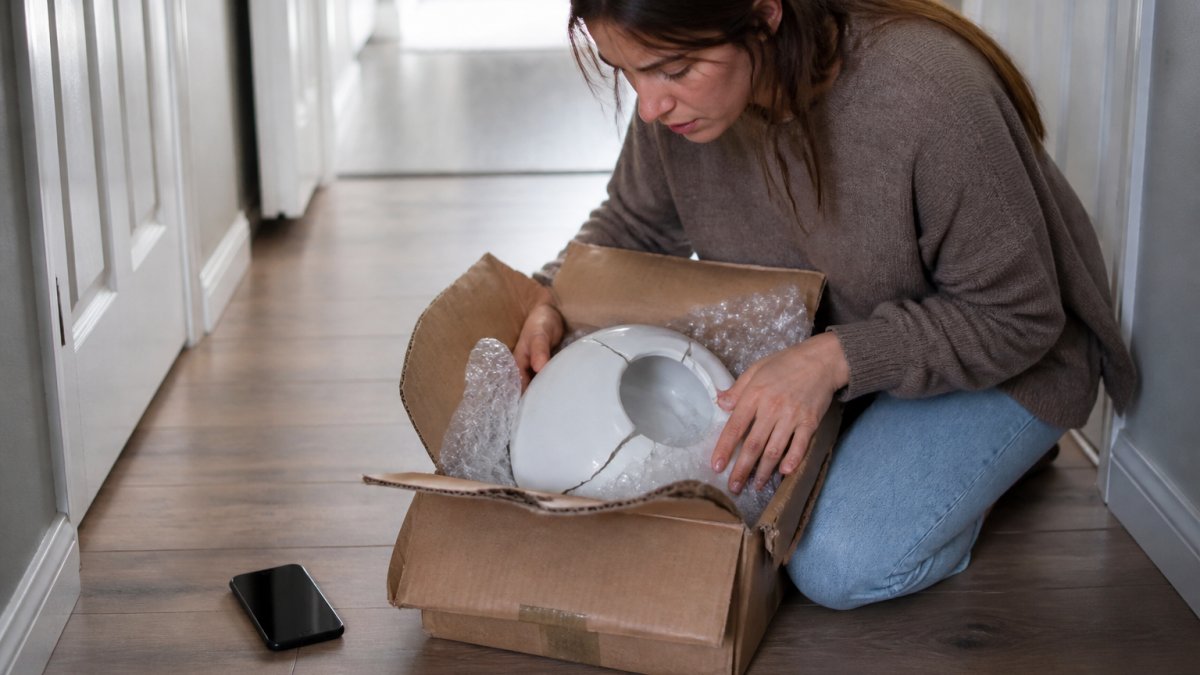
Take photos before you touch the item. Snap the outer box, the label, and the damage itself.
- Wide shot of the parcel as it arrived
- Close-up of any crushed or torn packaging
- Clear images of the damaged product
- The packing slip or order number
Keep the original packaging until the case is closed. It is your proof.
Damaged vs Faulty vs Change of Mind: Know the Difference
Damaged goods, faulty goods, and change-of-mind returns are three different things, and they come with different rights. Mixing them up is the most common mistake we see.
That last one matters. With change of mind, the retailer can charge you for return postage, and you only get 14 days to cancel. With damaged or faulty goods, the seller pays to put things right.
Here is how they compare:
| Situation | Who pays return postage | Time limit | Your remedy |
|---|---|---|---|
| Damaged on arrival | Retailer | 30 days | Refund, repair, or replacement |
| Faulty item | Retailer | 30 days, then up to 6 years | Repair or replacement first |
| Change of mind | You | 14 days | Refund of item cost only |
How Long Do I Have to Report Damaged Goods Bought Online?
You have 30 days from delivery to reject damaged goods and claim a full refund.
After 30 days, you lose the automatic right to a refund. But you can still ask for a repair or replacement.
For faulty items, the Citizens Advice guide to faulty goods explains that claims can run for up to six years in England, Wales, and Northern Ireland, and five in Scotland.
Report the damage as soon as you spot it. Waiting weakens your case.
How to Contact a Retailer About Damaged Goods
Contact the retailer in writing, not just by phone. Email or a returns portal message gives you a record you can point to later.
Use the customer service channel listed on your order confirmation. Include your order number in the subject line so it gets routed fast.
What to Include in Your Message
A clear message gets a faster result. Cover these points:
- Your order number and delivery date
- A short description of the damage
- Photos attached as files
- Whether you want a refund, repair, or replacement
- A deadline for their reply, such as 14 days
Here is a template you can copy:
Subject: Damaged item, order #[number]
Hello,
I received order #[number] on [date]. The [item] arrived damaged. I have attached photos of the packaging and the product.
Under the Consumer Rights Act 2015, I am rejecting the goods and requesting a [refund/replacement]. Please confirm how you will arrange collection and cover the return costs.
I would appreciate a reply within 14 days.
Thanks, [Your name]
Return Postage for Faulty Items: Who Pays?
The retailer pays return postage for damaged or faulty items. You should not be out of pocket for a problem that was not your fault.
If you paid for delivery, you can also claim that back. Your refund should cover the item cost plus the standard delivery charge.
Some retailers send a prepaid return label or arrange a courier collection. Others ask you to pay upfront and refund you later.
Packaging and Returning Your Damaged Item Safely
The way you pack a damaged item back up matters for two reasons: it protects the item on its return journey, and it protects your claim if the retailer later argues the damage happened after delivery. Treat the return as a documented handover, not just a parcel.
Before you pack: finish the evidence set
Do not seal the box until you have photographed everything the retailer could ask about. A complete set usually includes:
- The outer parcel as it arrived, including any crushed corners, tears, or water marks
- The shipping label, so the tracking number and address are legible
- The inner packaging and any void fill, which shows whether the item was protected
- The damaged product from more than one angle, plus a close-up of the specific fault
- The packing slip or order number alongside the item
Keep the original packaging until the case is closed. Retailers sometimes ask for it back, and couriers may want to inspect it if a transit claim is raised.
Pack it so the damage cannot be blamed on the return trip
Use the original box and inserts where you still have them. If not, choose a rigid outer box with at least a few centimetres of padding on every side, and make sure the item cannot shift when the box is tilted. Wrap the product separately before placing it in the outer box, and seal all openings with strong tape.
Photograph the packed parcel before it leaves
Take one photo of the sealed parcel showing the label and tracking number, and one of the contents before you close it. This takes seconds and closes the most common loophole in a damage dispute: the argument that the item was fine when it left you.
Use a tracked service and keep the receipt
Never send a damaged item back by an untracked method. If the parcel goes missing, the burden falls on you to prove you posted it. Keep the courier receipt, note the tracking number, and check the delivery confirmation. If the retailer provided a prepaid label, keep a copy of it and the drop-off receipt.
If the retailer asks you to pay postage upfront
For damaged or faulty goods, the retailer is responsible for the cost of the return. If they ask you to pay and claim it back, ask them to confirm that instruction in writing before you send anything. That message is useful later if the refund does not include the postage. Where you do pay upfront, keep the receipt and request reimbursement in the same written thread as the original complaint.
Returning in person or by collection
If the retailer offers a collection or a store return, ask for a receipt or a collection note that states the item was received damaged. That document is stronger than a tracking scan alone, because it records the condition at handover rather than just the delivery.
What If the Retailer Won't Resolve Your Damaged Online Order?
Most damaged-order disputes are settled in the first two messages. When they are not, the problem is usually that the retailer has stopped responding, is offering the wrong remedy, or is insisting you cover return postage. Each of those needs a different escalation route, so work through the stages below in order and keep a dated record of every contact.
Stage 1: Put your complaint in writing and set a deadline
Phone calls leave no trail. Send a written complaint through the retailer's customer service email or portal, restate the order number, the damage, the remedy you want, and the date you first reported it. Give them a clear deadline, such as 14 days, and say what you will do next if they do not reply. This single message is the document every later stage depends on.
Stage 2: Ask for a formal complaint or a manager
If the first reply is a refusal or a scripted response, ask for the complaint to be logged formally and escalated to a supervisor. Retailers with a formal complaints procedure usually have a fixed response window once a complaint is logged, which is more reliable than waiting on a general inbox.
Stage 3: Use your card provider's dispute route
If you paid by debit or credit card and the retailer will not refund, ask your bank about a chargeback. This is a card-scheme process, not a legal claim, and it works best when you can show you tried to resolve the issue directly first. Have your order confirmation, delivery date, photos, and the written exchange ready.
Stage 4: Report the retailer to trading standards
If the retailer is ignoring your statutory rights, you can report them to trading standards through the Citizens Advice consumer service. This does not recover your money directly, but it creates an official record and can prompt action where a pattern of complaints exists. Keep it separate from your own claim, which continues in parallel.
Stage 5: Use an alternative dispute resolution scheme or the courts
Some retailers belong to an alternative dispute resolution (ADR) scheme or a trade association with a conciliation service. If yours does, the scheme can review the dispute and issue a decision, often at no cost to you. Where no scheme applies, or the retailer refuses to engage, you can take a claim to court. The GOV.UK guidance on making a court claim is the correct starting point.
What to keep at every stage
- The original order confirmation and delivery note
- Your dated photos of the packaging and the damage
- Every email, portal message, and chat transcript
- The tracking number and courier receipt if you returned the item
- A short timeline: what happened, when, and what you asked for
A clear paper trail is what moves these cases. Retailers respond to documented, dated, specific complaints far more often than to repeated phone calls.
Conclusion
Getting stuck with a damaged online order is frustrating, but the process is straightforward once you know the steps. Check the parcel, photograph everything, report the damage fast, and keep your paperwork.
At Metanoia media, we stock tech, home, fitness, and lifestyle essentials. Browse our range and shop with confidence.
Which? guide to returning faulty goods
Frequently Asked Questions
What are the rules for returning faulty goods in the UK?
Under the Consumer Rights Act 2015, goods must be of satisfactory quality, fit for purpose, and as described. If a damaged online order fails any of these, you have a legal right to a refund, repair, or replacement. Within the first 30 days, you can reject the item and request a full refund. After 30 days, the retailer gets one chance to repair or replace it before you can claim a refund.
Who pays for return postage when an item arrives damaged?
The retailer should cover return postage for faulty items. If they ask you to pay upfront, keep the receipt and request reimbursement. Many retailers provide a prepaid return label or arrange a courier collection.
How long do I have to report damaged goods bought online?
Report the damage as soon as you notice it. For faulty items, the strongest protections apply within the first 30 days when you can reject the goods outright. Prompt reporting always makes the process smoother.
Can I return something I ordered online if I simply changed my mind?
Yes. You have 14 days from the day you receive the goods to cancel a distance sale and return the item. You do not need a reason. The retailer must refund the item cost and standard delivery within 14 days of receiving the returned goods or proof of return. Return postage costs for change-of-mind returns are usually your responsibility unless the retailer offers free returns.